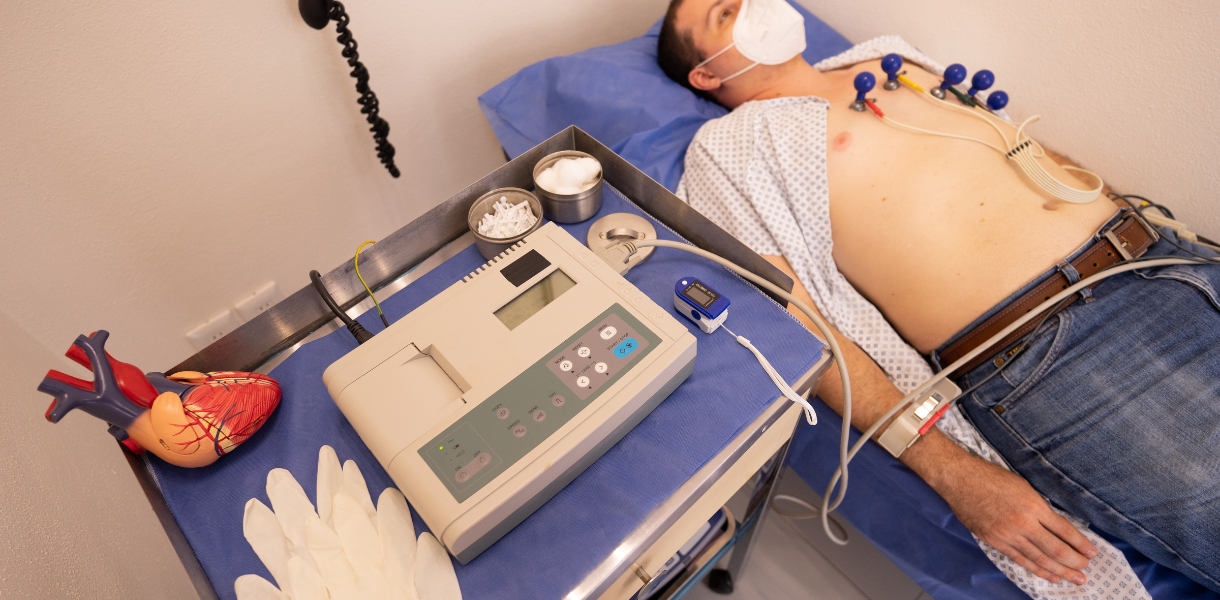
ECG (Electrocardiogram)
An Electrocardiogram (ECG or EKG) is a non-invasive diagnostic test that records the electrical activity of the heart over time. The heart generates electrical impulses that trigger its rhythmic contractions and allow blood to be pumped efficiently. The ECG captures these electrical signals via electrodes placed on the skin, typically on the chest, arms, and legs.The recorded pattern is displayed as waves on graph paper or a digital screen, which healthcare professionals analyze to assess the heart’s rhythm, rate, and conduction system. The main waves seen on an ECG include the P wave, representing atrial depolarization; the QRS complex, representing ventricular depolarization; and the T wave, representing ventricular repolarization.
ECGs are crucial for diagnosing a wide range of cardiac conditions such as arrhythmias, myocardial infarction (heart attack), heart block, ischemia, and electrolyte imbalances. The test is quick, painless, and widely available, making it a fundamental tool in emergency rooms, clinics, and hospitals.Interpreting an ECG requires understanding the waveforms, intervals, segments, and the heart rate derived from the tracing. Abnormalities can indicate issues like atrial fibrillation, ventricular hypertrophy, or conduction delays.